
Predictive RF Modelling Benefits: Save Thousands on Fit-Outs
Quick Answer: The core predictive rf modelling benefits are avoiding over-built or under-built access point counts, catching coverage and capacity problems before cabling is locked in, and avoiding the retrofit costs and change orders that turn a straightforward fit-out into a budget blowout. Run before construction starts, a predictive RF model is one of the cheapest insurance policies in a project budget.
If you’re planning a fit-out, office move, or warehouse build and Wifi hasn’t come up yet in the conversation, it’s worth raising now rather than after the cabling contractor has already left. At Rydatech, we see the same pattern on almost every project: Wifi gets treated as something to sort out once the walls are up, when the cheapest window to get it right has already closed.
The economics are straightforward. A floor-plan estimate either guesses too many access points, which wastes hardware and installation budget, or too few, which shows up later as coverage complaints and an expensive return visit. A predictive model replaces the guess with a plan matched to your actual building, before that guess gets locked into the cabling contractor’s drop list.
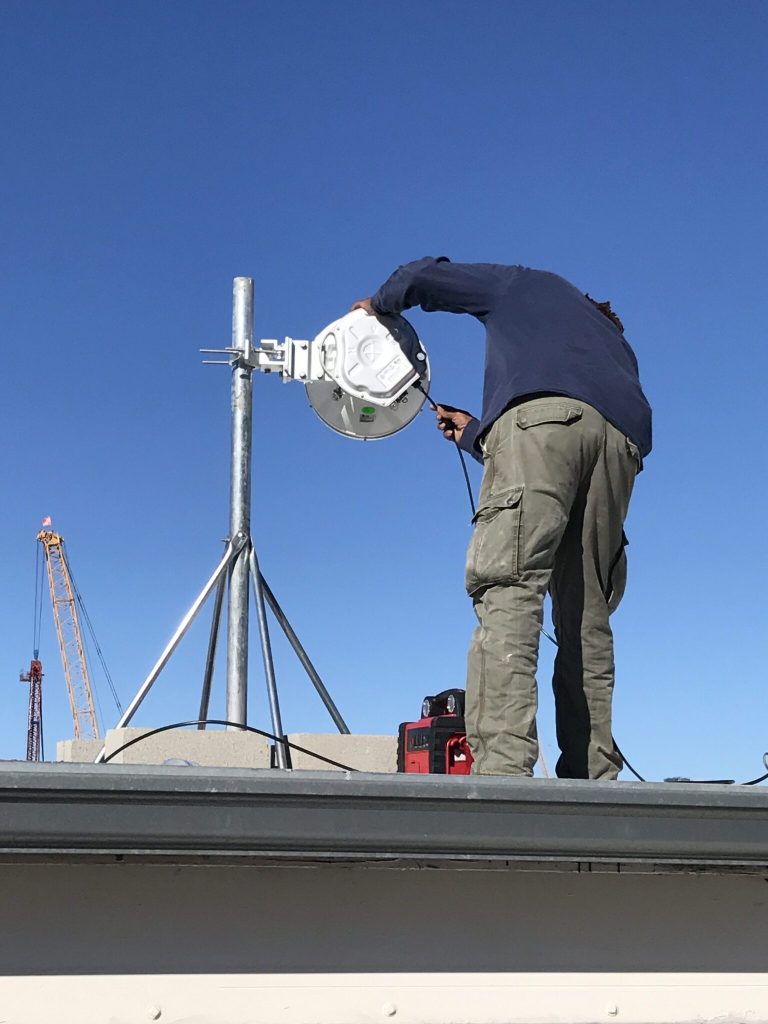
Predictive RF Modelling Benefits: Why Timing Is Everything
A fit-out has one narrow window where changing the plan is cheap: before walls close and cabling is locked in. Once the cabling contractor has run drops to fixed locations and the ceiling grid is in, moving an access point stops being a design decision and becomes a construction change order.
This is where structured cabling planning and Wifi design need to happen in the same conversation, not two separate ones. Cabling contractors typically work from a fixed set of drop locations. If the Wifi design hasn’t been modelled yet when those locations are decided, you end up with access points wherever the cabling happens to land, rather than where the RF actually needs them.
What Predictive RF Modelling Actually Involves
A predictive RF model is a software-based simulation of how Wifi signal will behave inside your specific building, run from floor plans before a single cable is pulled. It accounts for wall materials, ceiling height, expected device density, and the access point hardware being specified, to produce a heatmap of expected coverage, an access point count, and exact placement recommendations.
This is different from an onsite survey, which measures a building that already exists. A predictive model works from the floor plan alone, which makes it the only option during design and construction, before the space is walkable.
If you’re weighing up which type of survey applies at which stage, our guide on the difference between active and passive Wifi surveys covers how predictive modelling, active surveys, and passive surveys fit together across a project timeline.
The Real Cost of Skipping It
This is where predictive rf modelling benefits show up most clearly on a budget spreadsheet, not just on a coverage map. Two separate cost problems compound when Wifi design is left until after the fit-out is built:
- Cabling rework: Structured cabling installed during the fit-out costs a fraction of retrofitting the same pathways once walls and ceilings are closed. Moving or adding cable runs after occupancy means opening finished walls, working around staff and furniture, and re-certifying the new pathways, none of which apply when the same runs are planned in before the space is built.
- Over- or under-built access point counts: Without a model, AP counts are usually estimated from rough rules of thumb applied to floor area. That guesswork cuts both ways: too many access points wastes hardware and labour budget, and too few shows up later as coverage complaints and a costly return visit to fix it, on top of whatever cabling rework that fix requires.
Both of these are avoidable with the same step: modelling the RF design before the fit-out locks in cabling and access point locations.
Signs Your Fit-Out Needs This Before Cabling Starts
Some projects carry more RF risk than others, and are more likely to regret skipping this step. It’s worth prioritising a predictive model if your fit-out involves:
- A high-density, hot-desking, or activity-based working layout, where device density is hard to estimate from floor area alone.
- A warehouse, logistics, or distribution centre with metal racking, which creates RF dead zones a simple floor-area estimate won’t catch.
- Heavy reliance on video conferencing or cloud applications, where marginal coverage shows up as call quality complaints rather than outright dropouts.
- A multi-floor or multi-tenant building, where signal from neighbouring floors or tenancies can interfere with your own design.
- Any handheld or voice communication devices, scanners, or IoT equipment that depend on consistent roaming between access points.
How This Fits Into Your Fit-Out Timeline
The predictive rf modelling benefits compound when it’s paired with validation after the fact, rather than treated as a one-off exercise. The sequence that works is:
- Predictive RF modelling during design, before cabling locations are finalised, to produce an access point count, placement plan, and expected coverage heatmap.
- Cabling and access point installation using that plan, so drops go exactly where the RF design needs them rather than wherever is convenient.
- An onsite validation survey once the space is built, to confirm real-world coverage matches the prediction and catch anything the model couldn’t account for, such as furniture or fit-out changes made after modelling.
This is the process our Predictive & Pre-deployment Wifi Survey service is built around. If your fit-out also involves new cabling and access point installation, our Wifi installation service picks up from the predictive design and carries it through to a validated, working network.
Frequently Asked Questions
What is predictive RF modelling? It’s a software-based simulation of how Wifi signals will propagate through a building, based on floor plans, wall materials, and expected device density. It’s used to plan access point count and placement before construction, when the space isn’t yet walkable for a physical survey.
How is predictive RF modelling different from an onsite Wifi survey? A predictive model works from a floor plan alone and is used before or during construction. An onsite survey measures a building that already exists, either passively listening to existing signals or actively testing with a real access point. Most projects benefit from both, at different stages.
Can predictive RF modelling replace a validation survey after installation? No. A predictive model is a plan, not a guarantee. Furniture, last-minute fit-out changes, and real-world interference can all shift outcomes slightly from the prediction. Best practice is predictive modelling before installation, followed by an onsite validation survey once the space is built.
How much does predictive RF modelling typically save? It varies by building, but the saving comes from two directions at once: avoiding hardware and labour spent on access points you didn’t actually need, and avoiding the cost of a return visit to fix coverage gaps that guesswork missed. Retrofitting cabling and access point locations after a space is finished is consistently more expensive than planning them in before construction, simply because of the walls, ceilings, and disruption involved in doing it afterwards.
Do I need this for a small office fit-out? It scales down. A small, simple open-plan office carries less RF risk than a warehouse or high-density space, but the same principle applies: modelling before cabling is locked in costs little and avoids retrofit costs if the estimate turns out to be wrong.
If your fit-out is still at the planning stage, this is the cheapest point to get your Wifi design right. Rydatech can run a predictive RF model from your floor plans before cabling locations are finalised, and follow it up with onsite validation once the space is built.